Diabetes Is Profitable.
Why Would the System Stop It?
How corporate incentives help produce type 2 diabetes—and reward the industries that treat it
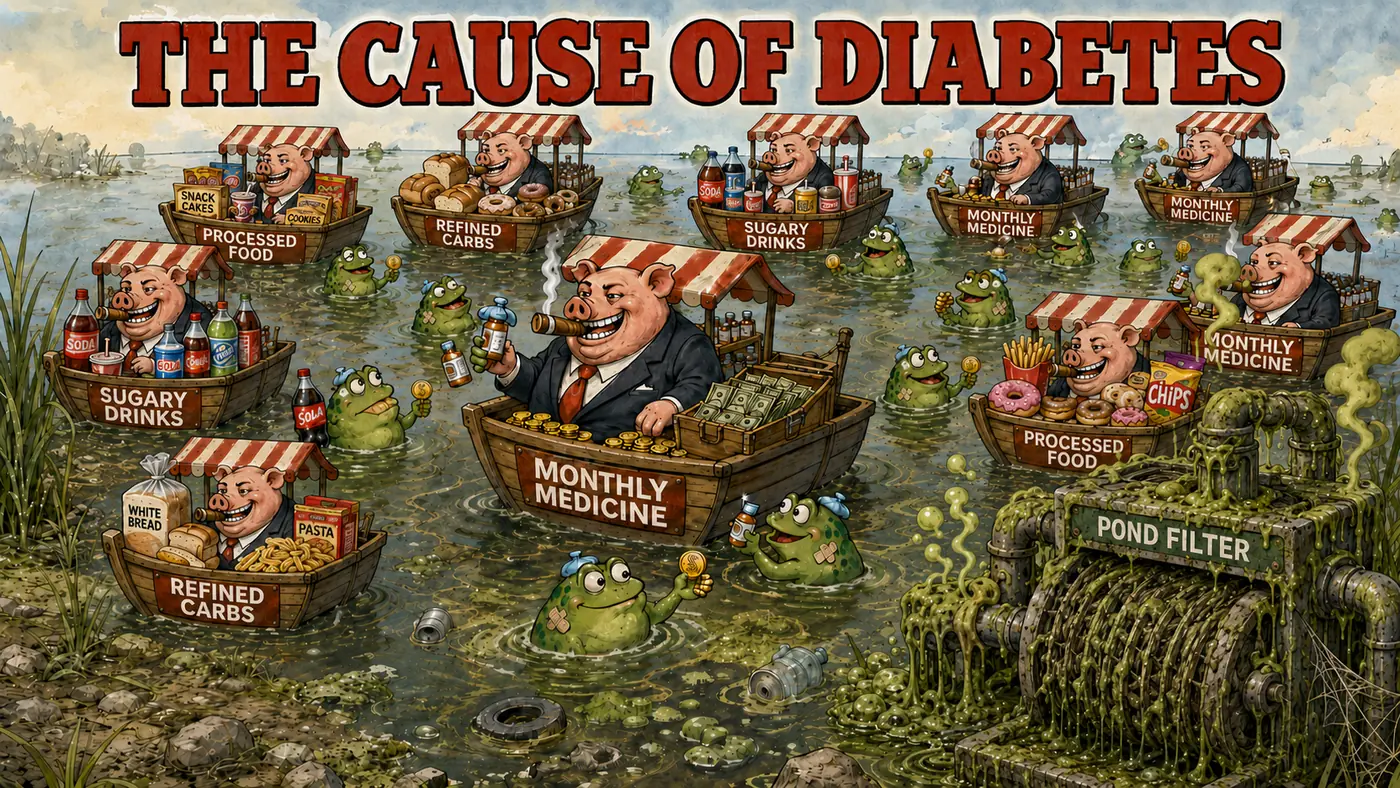
Prepared 5 August 2026 Medical and public-health evidence current to the date of preparation
Why Diabetes Is Profitable
Diabetes is profitable. That is deliberately provocative. It is also a factual description of the incentive structure surrounding the modern type 2 diabetes epidemic. Food and beverage companies can earn recurring revenue from products that raise disease risk; pharmaceutical, device and healthcare businesses can earn recurring revenue from monitoring and treating the resulting chronic illness. No conspiracy or deliberate plan is required.
The biological pathway ends in the body, but the upstream machinery that created the modern exposure environment is corporate. The argument becomes clear once that machinery—and the way it externalizes metabolic costs—is exposed.
What “Diabetes Is Profitable” Actually Means
In practice, large corporations are required to grow.
A merely profitable corporation is not considered successful if its revenue, margin, market share or share price stops rising. Flat performance is treated as failure.
Required here means enforced by survival rather than by a statute ordering quarterly growth. Directors are expected to increase long-term firm value; boards, markets, compensation plans and investors translate that duty into financial performance targets. [13, 14]
Executives are not selected merely for running a sound, profitable business. They are selected for producing more: more sales, more frequent consumption, more customers, more margin and more predictable recurring revenue.
An executive willing to stimulate more consumption, market more aggressively, enlarge portions, target children, obscure health costs or resist regulation can produce stronger short-term numbers than an executive who voluntarily leaves profitable demand untouched.
The reward arrives immediately; the harm often appears years later. The company records the sale, while patients, families, employers, insurers and taxpayers inherit most of the metabolic cost.
That asymmetry decides who wins. The aggressive executive is rewarded, promoted or copied. The restrained executive misses targets, loses capital or is replaced. The more responsible firm surrenders shelf space and market share to a less restrained competitor.
No conspiracy is needed. Competitive selection does the work. Over time, the system fills with the executives, firms and products best at converting human vulnerability into growth while keeping downstream harm off their own accounts.
The Argument in One Sentence
Diabetes is profitable because corporations compelled to keep growing turned cheap, highly palatable food and sugary drinks into scalable repeat-purchase systems, while the disease they helped produce was left for individuals and society to absorb—and became a separate recurring market for treatment.
The Causal Chain
Causal chain: Compulsory growth → executive and market selection → optimization for repeat consumption → cheap, convenient, highly palatable and heavily marketed food and drink → chronic excess intake and adverse dietary exposure → weight gain, ectopic fat and insulin resistance in susceptible people → beta-cell strain or failure → population-scale type 2 diabetes.
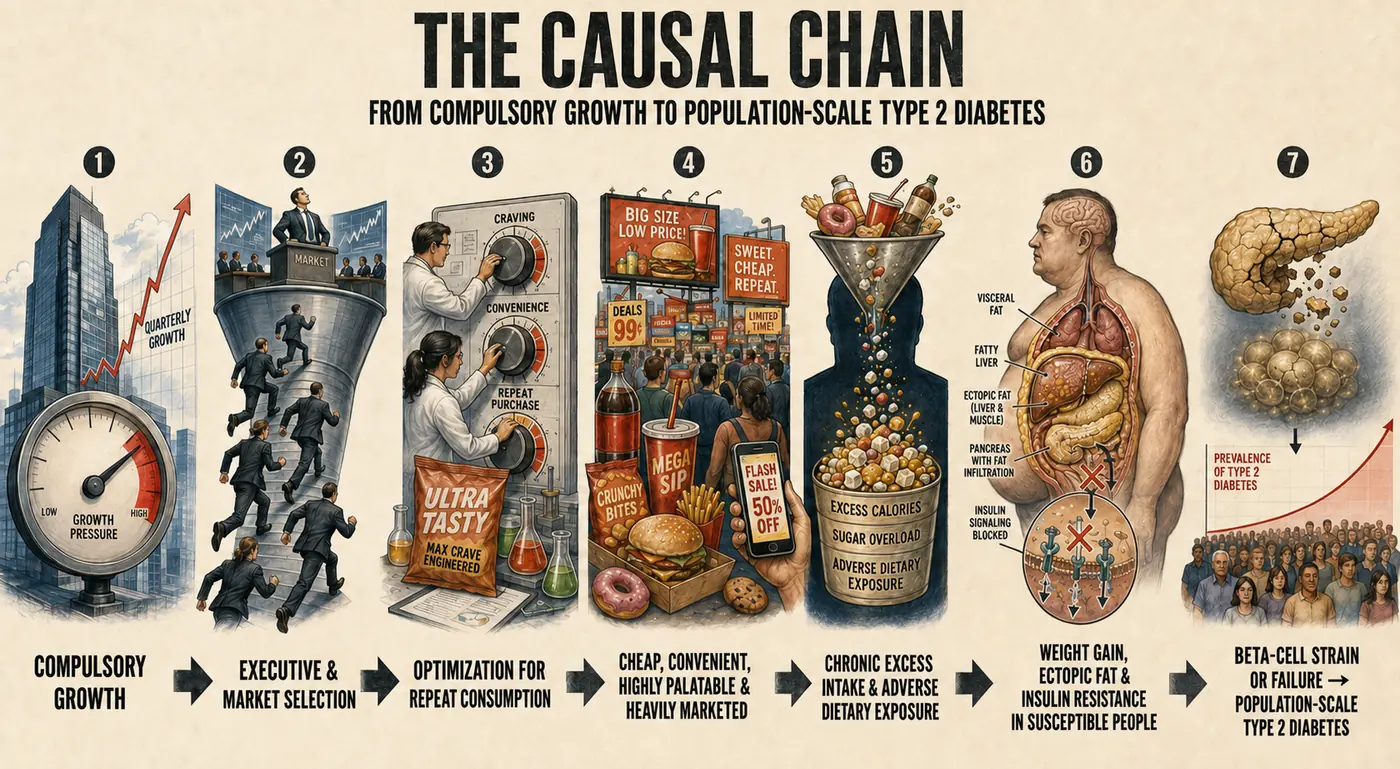
The frog: The disease appears at the end of the chain, but the machinery that scales it begins seven steps earlier.
How Corporate Structures Produce Disease at Scale

“Cause” Operates at More Than One Level
The pancreas is where the damage becomes visible; it is not where the causal story begins. Corporate structures determine which products receive capital, how they are formulated, how cheaply and widely they are distributed, how relentlessly they are promoted and how effectively regulation is resisted. Calling insulin resistance the cause while ignoring the system that manufactured the exposure is biologically correct and causally incomplete. It means the system materially created the exposure environment through which biological disease was and continues to be produced at scale.
| Causal level | What it explains | Diabetes pathway |
|---|---|---|
| Upstream structural | Why a profitable but harmful exposure environment was produced, scaled and defended | Firm-value growth, performance-linked executive incentives, market competition, cost externalization, marketing power and political resistance |
| Intermediate environmental | What people repeatedly encounter and consume | Availability, price, convenience, portioning, formulation, advertising and social normalization |
| Proximate biological | How disease develops in the body | Chronic excess energy and adverse dietary exposure, adiposity or ectopic fat, insulin resistance, beta-cell strain and insufficient insulin response |
The National Institute of Diabetes and Digestive and Kidney Diseases (NIDDK), the U.S. research institute specializing in these conditions, identifies insulin resistance—when cells respond less effectively to insulin, insufficient insulin production, overweight or obesity, inactivity and genes as immediate causes and risk factors. Those are the final biological links. They do not explain why the disease-producing exposure environment was built, financed and spread through an entire population. [2, 11]
The Corporate Selection Mechanism
A large food corporation cannot merely keep selling a profitable amount. It must find ways to sell more. Products that are cheap to make, shelf-stable, convenient, intensely marketable, quick to consume and effective at generating repeat purchases therefore have a structural advantage. The firm that increases consumption grows; competitors copy it; investors reward it; retailers give it more space.
The metabolic damage is not charged to the product when it is sold. Revenue appears immediately on the company’s accounts; diabetes may appear years later on somebody else’s medical record and budget. The firm privatizes the gain while the public absorbs much of the cost. That is not an accidental loophole. It is the economic condition that allows harmful products to remain commercially successful. [13]
This is selection, not orchestration. Individual executives may care deeply about health. But the executive who refuses a legal, profitable growth strategy creates an opening for a rival—or a replacement—who will take it. Good intentions are weaker than a system that rewards the harmful choice and penalizes restraint.
From Profitable Food Design to Overconsumption
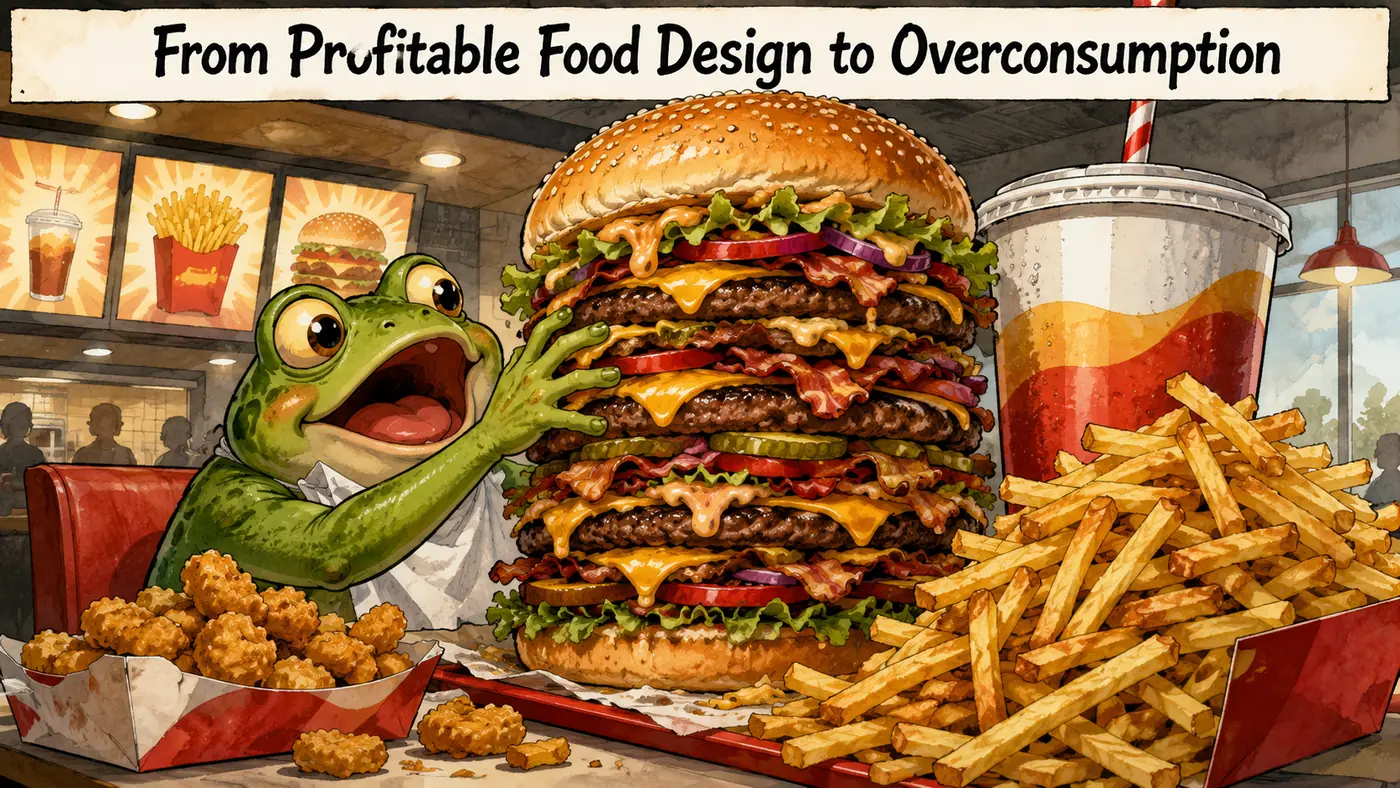
No randomized trial can assign populations to two competing corporate systems. The causal case must therefore be assembled across levels. In a controlled inpatient crossover trial, 20 adults consumed about 508 additional kilocalories per day and gained about 0.9 kg during an ultra-processed diet, while losing about 0.9 kg during the unprocessed diet, despite the diets being presented with matched calories, macronutrients, sugar, sodium and fiber. The trial was short and small, but it directly demonstrates that food form and formulation can increase intake and weight. [3]
Long-term prospective evidence then connects the exposure to disease. A 2023 analysis combining three large US cohorts with a meta-analysis—a statistical method that combines results from multiple studies of 415,554 participants and 21,932 cases found that each 10% increment in ultra-processed food intake was associated with a 12% higher risk of type 2 diabetes. Importantly, some ultra-processed subgroups were not harmful and some were associated with lower risk, so “ultra-processed” is a useful population category, not a verdict on every packaged product. [4]
Sugar-sweetened beverages provide a more specific pathway. A systematic review—a structured search and synthesis of the relevant research and meta-analysis found habitual consumption associated with higher type 2 diabetes incidence even after adjustment for adiposity; under stated causal assumptions, the authors estimated that sugary drinks could account for a material fraction of future cases. Observational residual confounding—when another factor may partly explain an apparent relationship remains possible, but the direction is consistent with the broader metabolic evidence. [5]
From Exposure to Metabolic Disease
In susceptible people, sustained excess energy intake and adverse dietary patterns can increase total and ectopic fat, particularly in the liver and pancreas; reduce insulin sensitivity in muscle, fat and liver; raise the insulin demand placed on pancreatic beta cells; and eventually expose a failure to produce enough insulin for the prevailing resistance. Blood glucose then rises into the diabetic range. Susceptible does not mean a small vulnerable minority. The Centers for Disease Control and Prevention (CDC), the main U.S. public-health agency for surveillance and health statistics, estimates 115.2 million U.S. adults have prediabetes and approximately 40 million people have diabetes; taken together, the arithmetic shows that well over half of American adults already have impaired glucose regulation or diabetes. The majority of the population is therefore demonstrably susceptible under the prevailing exposure environment. Susceptibility is a continuum, not a binary label: genes, age, sleep, medications, pregnancy history, socioeconomic conditions and physical activity modify how quickly the threshold is crossed, while a smaller proportion remains relatively resistant despite prolonged exposure. [1, 2, 11, 12]
The modifiability of the pathway is demonstrated by the Diabetes Prevention Program. Among 3,234 high-risk participants, an intensive lifestyle intervention reduced diabetes incidence by 58% relative to placebo over an average 2.8 years, compared with a 31% reduction from metformin. This does not prove that corporate structures caused every prevented case; it does show that the epidemic is not merely the fixed expression of genes. [6]
Scale Converts Risk Into an Epidemic
A modest increase in individual risk becomes a large population effect when exposure is cheap, ubiquitous, heavily promoted and repeated daily across millions of people. CDC currently estimates 40.1 million people in the United States have diagnosed or undiagnosed diabetes, with type 2 accounting for the large majority of adult cases. The report’s thesis concerns why the modifiable exposure environment reached this scale. [1, 2]
The World Health Organization explicitly identifies product design, pricing, targeted marketing, supply chains, lobbying and preference shaping as commercial determinants of health. It specifically connects company choices involving ultra-processed foods and sugar-sweetened beverages with obesity and type 2 diabetes. [7]
Why the System Does Not Readily Correct Itself
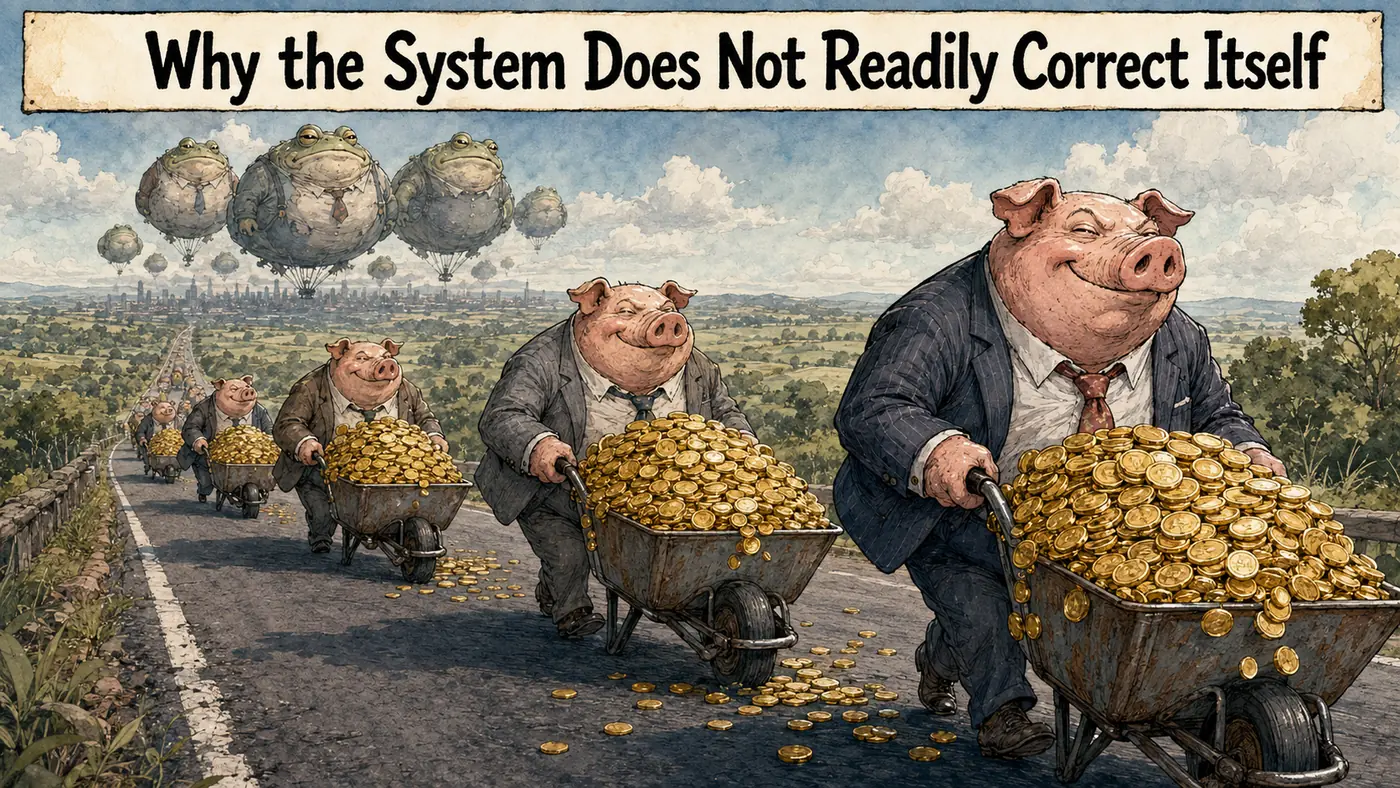
Markets do not correct costs they do not price. If the diabetes burden were promptly charged back to the products and firms that helped create it, harmful strategies would lose much of their advantage. Instead, correction depends on regulation, taxation, litigation, labeling, procurement rules or mass consumer rejection—and the companies threatened by those corrections can spend heavily to delay, dilute or defeat them. The World Health Organization (WHO), the United Nations agency for international public health, and empirical studies document the lobbying, research funding, advocacy and individual-responsibility framing used to protect the commercial model. [7–10]
Diabetes is profitable at both ends of the chain. Food companies earn recurring revenue from the products that increase disease risk; healthcare companies earn recurring revenue from monitoring and treating the resulting chronic illness. They do not need to coordinate. Prevention simply loses the investment contest because changing the filter occasionally produces less capturable revenue than selling to every frog and then treating every sick frog month after month.
The frog: The pigs discovered that polluting the pond and treating the frogs are two separate revenue streams. Nobody can now claim they simply overlooked the filthy filter.
The Counterfactual Test
Question: Without the present growth-dependent corporate selection system, would the same food-production, consumption, marketing and political environment probably have developed with comparable intensity and scale?
Almost certainly not at comparable scale. Type 2 diabetes would still exist because genetic susceptibility, aging, inactivity and other causes would remain. But the observed combination of global formulation, extremely low unit cost, pervasive distribution, mass advertising, engineered convenience and political influence is the product of the commercial system that selected, financed and defended it.
This is a counterfactual inference, not a directly measurable randomized comparison between two worlds. It is therefore less certain than the biological and dietary links. The evidence strongly establishes the pathway and the commercial mechanisms; it cannot assign a precise percentage of all diabetes cases to “corporate structure” as a single exposure.
Causal Verdict
Verdict: At population level, current corporate structures are a major upstream cause of the modern type 2 diabetes epidemic. They are not the sole cause and do not explain every case. Those qualifications define the claim; they do not weaken it.
The phrase “diabetes is profitable” does not mean that every company profits from every case or that anyone deliberately planned the epidemic. It means the prevailing system repeatedly rewards the sale of disease-producing exposure and then creates additional recurring revenue from the chronic illness that follows.
Relationship to Existing Scholarship
Published research supports the principal upstream and downstream mechanisms identified in this report, although no single study tests them as one unified incentive system. A separate review explains the five closest publications, what each supports, their limitations and the synthesis contributed by this report. Read the related research and scholarly context →

Confidence: approximately 90% that current corporate structures are a substantial upstream cause of the epidemic; approximately 75–85% that an otherwise comparable epidemic would not have emerged with the same speed, intensity and scale without those structures. The lower confidence on the counterfactual reflects its inherent unobservability, not an absence of evidence for the pathway.
Outliers, Exceptions and Exclusions
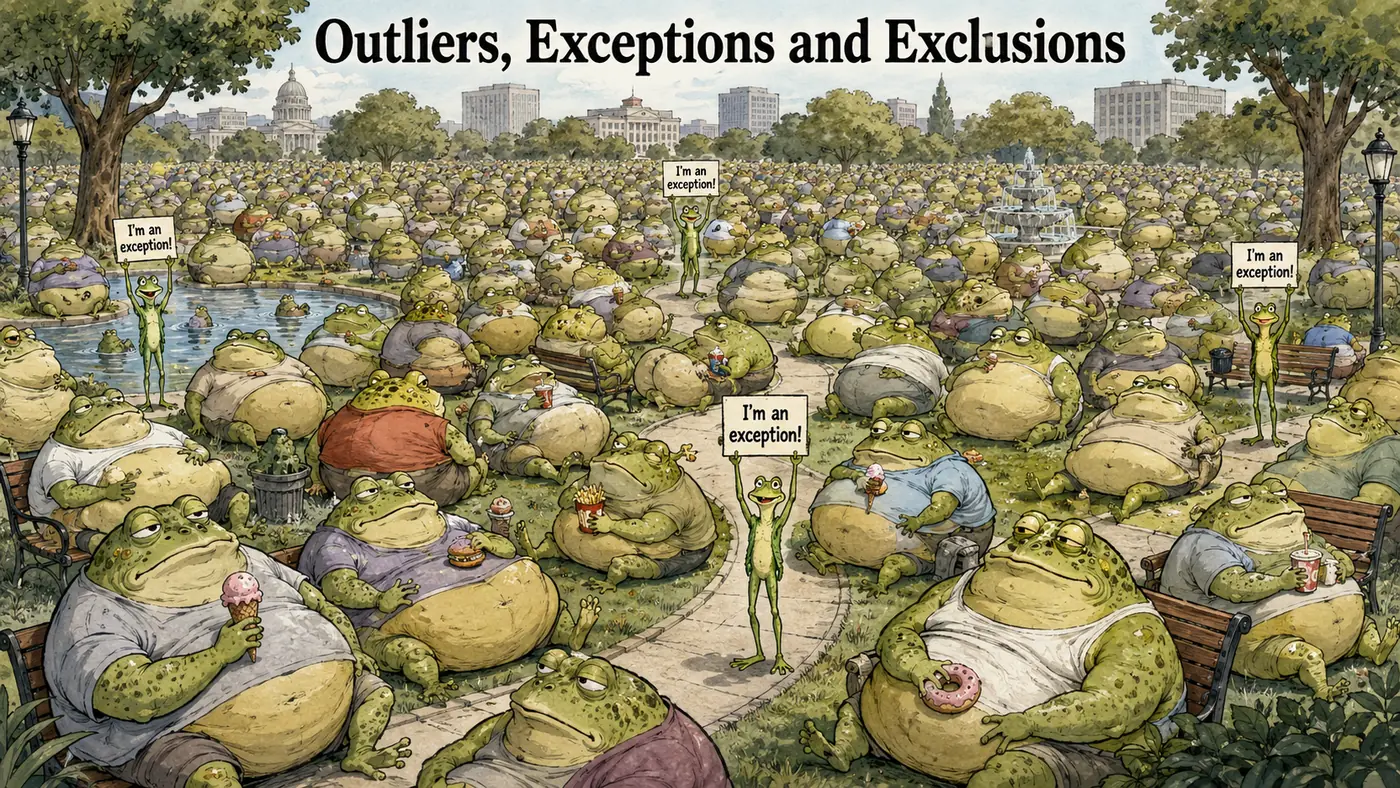
Type 1 diabetes. An autoimmune disease with a different causal pathway. It is outside the claim, which concerns the modern type 2 diabetes epidemic.
Gestational, monogenic and secondary diabetes. Pregnancy-related diabetes, inherited single-gene forms, pancreatic disease, endocrinopathies and some medication-induced cases require separate explanations.
Lean type 2 diabetes. A 2025 review estimates that the genuinely lean phenotype represents roughly 3–8% of type 2 diabetes cases globally and approximately 5–10% in the United States and Western Europe, depending on the BMI definition and population. In other words, about 90–95% of Western cases are not in this lean outlier category. Even that 5–10% cannot simply be removed from the structural pathway: many apparently lean cases still involve ectopic liver or pancreatic fat, adverse dietary exposure, inactivity or reduced beta-cell capacity. Lean means not visibly overweight; it does not automatically mean environmentally unrelated. [15]
Genetic susceptibility. Genes materially affect individual risk and help explain who develops disease under similar exposure. They do not by themselves explain why modifiable population exposure changed.
Not all carbohydrates. Whole grains, legumes, vegetables and fiber-rich foods should not be equated with sugary drinks or refined, low-fiber products. The mechanism is not “carbohydrate exists.”
Not all processing. Freezing, canning, pasteurization and fortification can improve safety, affordability and nutrition. Even within ultra-processed categories, risk varies by product subgroup. [4]
Not every corporation. Some companies create beneficial products, reformulate, accept lower margins or support prevention. Those exceptions are real. They do not change the competitive direction of the system.
Not the elimination of personal agency. People still make consequential choices. Structural causation explains why choices are systematically presented, priced, promoted and normalized in one direction; it does not make individual behavior irrelevant.
Intent is not required. The system produces harm by rewarding profitable conduct that raises risk and externalizes cost. Deliberate deception may occur in particular cases, but the mechanism works without it.
Not proof that treatment is harmful or unnecessary. Diabetes medicines and clinical care prevent complications and save lives. The criticism concerns distorted allocation and underpowered prevention, not the legitimacy of treating existing disease.
What percentage follows the articulated causal pathway? No study can randomize entire societies to corporate and non-corporate food systems, so there is no directly measured “corporate-structure percentage.” But the arithmetic places useful bounds around the answer. Obesity alone is estimated to account for 30–53% of new U.S. type 2 diabetes cases. A large prospective study of women estimated that 91% of cases were attributable to not being in a combined low-risk lifestyle category. The Diabetes Prevention Program reduced incidence by 58% among high-risk people, while the genuinely lean phenotype appears to represent only about 3–8% of global cases. [6, 15–17]
Those figures overlap and must not be added together. They do, however, make one conclusion difficult to avoid: modifiable diet, weight and activity pathways account for a clear majority of contemporary type 2 diabetes. A reasonable synthesis is that roughly 60–80% of cases in high-income food environments depend materially on this modifiable exposure pathway. That range is a reasoned estimate, not a measured population-attributable fraction, and corporate structure is not the sole cause of every case within it. The narrower and stronger conclusion is that the causal relationship described in this report explains most of the modern epidemic, while atypical biology and relatively exposure-independent cases explain a minority.
A related systems question: the root-cause thought experiment follows this chain further upstream and asks whether corporate incentives are an ultimate cause or a high-leverage intervention point within a larger interacting system.
Counterarguments and Their Weaknesses
“Diabetes Is Genetic.”
This confuses susceptibility with epidemic causation. Genes help determine who crosses the threshold; they do not explain why a relatively stable gene pool was suddenly pushed through that threshold at vastly greater scale.
“People Choose What They Eat.”

This pushes responsibility downstream until the corporations that designed the products, prices, portions, advertising and availability disappear from the causal picture. People make choices, but marketing exists precisely to influence those choices. It is not neutral information. It is professionally engineered persuasion: repetition, placement, packaging, sponsorship, emotional association, influencers, health halos and selective claims are used to alter what people notice, believe, desire and repeatedly buy.
Marketing can mislead without making a literally false statement. A product can be sold as low-fat, fortified, natural, athletic, convenient or family-friendly while the overall message obscures its sugar load, refined starch, portion size or likely effect on repeated consumption. WHO reviewed 143 content-analysis studies and 36 consumer studies and concluded that food marketing remains pervasive and persuasive, predominantly promotes foods that contribute to unhealthy diets, and is associated with habitual consumption of the marketed or less healthy foods. [10]
Commercial persuasion is also dramatically more visible than the scientific evidence capable of correcting it. The FTC documented $1.79 billion spent marketing food to U.S. children and adolescents in 2009 alone, while online, mobile and viral spending rose 50%. Most people encounter commercial food messaging repeatedly from childhood and never read a primary nutrition study. A precise 10,000-to-1 exposure ratio has not been measured and should not be presented as a fact, but the underlying asymmetry is beyond serious dispute: the sales story reaches the public with vastly greater frequency, money and psychological force than the scientific correction. [18]
The frog: The frogs technically choose what to buy—but the pigs control nearly every sign they see around the pond.
“Excess Calories Cause Weight Gain, Not Corporations.”
That answers how weight increases inside a body while evading why chronic excess became so cheap, easy, normalized and persistent across a population. The Hall trial demonstrates that food form and formulation can drive higher intake even when presented nutrients are matched. [3]
“Association Is Not Causation.”
Correct for any single association, but irrelevant as a blanket dismissal. The case rests on converging evidence: controlled diets increase intake and weight; prospective studies connect the exposures with incident diabetes; randomized lifestyle intervention prevents many cases; and direct evidence shows commercial actors shaping products, preferences and policy. [3–10] Structural causation is the synthesis of that chain, not the overreading of one correlation.
“Diabetes Existed Before Modern Corporations.”
The disease predates the modern corporation; the epidemic does not. A biological possibility can exist for centuries before a new environment drives it through a population at industrial scale.
“Affordable Processed Food Has Real Benefits.”
Shelf life, convenience, safety and low cost are real benefits. They are not a moral credit that cancels diabetes. A product system can be useful, profitable and population-scale harmful at the same time.
“Not All Companies Behave Badly.”
This misunderstands a system claim as an accusation against every participant. The question is not whether exceptions exist. It is which behavior receives more capital, market share, executive reward and replication over time.
“Regulation, Taxes and Reformulation Can Change Behavior.”
Exactly. Regulation works by changing the profit calculation the unregulated market got wrong. Its necessity confirms the structural problem: healthier conduct becomes competitive only after outside rules make the company absorb more of the cost it previously imposed on everyone else.
“Aging and Improved Diagnosis Explain the Epidemic.”
They explain part of measured prevalence, not the epidemic as a whole. They do not erase the large modifiable component demonstrated by prevention trials, rising youth cases and the dietary and obesity pathways.
“Corporate Structure Is Too Abstract to Be a Cause.”
Corporate structure is legally abstract; its factories, pricing, formulations, advertisements, distribution contracts and lobbying are not. A cause does not have to touch the pancreas. It has to alter the probability and scale of the pathway that eventually does.
Citation Links
The links below establish the biological pathway, the dietary exposures, the population evidence, the commercial determinants, and the corporate governance and compensation pressures that connect them. The structural conclusion is the synthesis of those documented components.
CDC — National Diabetes Statistics Report (2026) — Current US prevalence estimates: 40.1 million people with diagnosed or undiagnosed diabetes and 115.2 million adults with prediabetes.
NIDDK — Type 2 Diabetes: causes, risk and prevention — Authoritative overview of insulin resistance, insufficient insulin, obesity, inactivity, genes and prevention.
Hall et al. — Ultra-Processed Diets Cause Excess Calorie Intake and Weight Gain (Cell Metabolism, 2019) — Randomized inpatient crossover trial: roughly 508 additional kcal/day and weight gain on the ultra-processed diet.
Chen et al. — Ultra-Processed Food Consumption and Risk of Type 2 Diabetes (Diabetes Care, 2023) — Three large US prospective cohorts plus meta-analysis; also documents meaningful differences among ultra-processed subgroups.
Imamura et al. — Sugar-Sweetened Beverages and Incident Type 2 Diabetes (BMJ, 2015) — Systematic review, meta-analysis and population-attributable estimates for sugary drinks and diabetes incidence.
Diabetes Prevention Program Research Group — Lifestyle Intervention or Metformin (NEJM, 2002) — Randomized trial: intensive lifestyle intervention reduced incidence by 58%, compared with 31% for metformin, among high-risk participants.
World Health Organization — Commercial Determinants of Health — Defines how product design, pricing, marketing, lobbying, preference shaping and other commercial activities affect obesity, diabetes and other health outcomes.
Gilmore et al. — Defining and Conceptualising the Commercial Determinants of Health (The Lancet, 2023) — Framework for understanding systems, practices and pathways through which commercial actors shape health and equity.
Mialon et al. — Corporate Political Activity of the Food Industry in France — Empirical documentation of food-industry political practices relevant to public-health nutrition policy.
World Health Organization — Protecting Children from Harmful Food Marketing (2023) — WHO guidance and evidence concerning pervasive marketing of foods high in fat, sugar and salt to children.
NIDDK — Insulin Resistance and Prediabetes — Biological explanation of insulin resistance, prediabetes, risk factors and prevention.
World Health Organization — Diabetes Fact Sheet — Global clinical and public-health overview of diabetes, risk reduction and complications.
Delaware Court of Chancery - McRitchie v. Zuckerberg (2024) - Explains firm-specific fiduciary duties, long-term corporate value and negative externalities, including how a firm can keep the gain while dispersing the social cost.
U.S. Securities and Exchange Commission - Pay Versus Performance Disclosure Rules - Documents the formal linkage among executive compensation, shareholder return, net income and company-selected financial performance measures.
Singh et al. - Lean Type 2 Diabetes: The Overlooked Epidemic Reshaping Global Health (2025) - Reviews the prevalence, definitions and mechanisms of lean type 2 diabetes; estimates approximately 3–8% of cases globally and 5–10% in the United States and Western Europe.
Cameron et al. - Obesity and Incident Type 2 Diabetes in the United States (JAHA, 2021) - Estimates that obesity was associated with 30–53% of new type 2 diabetes cases in the studied U.S. populations.
Hu et al. - Diet, Lifestyle, and the Risk of Type 2 Diabetes Mellitus in Women (NEJM, 2001) - Prospective cohort analysis estimating that 91% of cases were attributable to not being in a combined low-risk lifestyle category, under the study assumptions.
Federal Trade Commission - Food Marketing to Children and Adolescents Follow-Up Report (2012) - Documents $1.79 billion in youth-directed food marketing in 2009, integrated campaigns, and a 50% increase in online, mobile and viral marketing spending.
Final formulation
Diabetes is profitable because current corporate structures reward selling more sugar, refined starch, convenience and repeated consumption while sending the metabolic bill elsewhere. Those structures did not invent type 2 diabetes. They built and defended an environment that finances disease-producing exposure at vast scale and then supports recurring markets for managing the result. Such a system is not merely associated with the epidemic; it is one of its causes. A more accessible thought experiment asks whether society can make harm unprofitable across this and other domains.
The frog
Not every fisherman wants polluted pond water. But treating every sick frog each month is far more profitable than changing the pond’s filter twice a year—so the medicine boats multiply while the water stays polluted.
Addendum: The Pattern Is Not Hypothetical
This addendum is deliberately separated from the diabetes analysis so that the supporting examples do not distract from its central causal argument. It does not claim that every corporation behaves dishonestly, or that every case below independently proves that corporate structures caused the diabetes epidemic. It tests a narrower prediction: when revenue is immediate, harm is delayed or dispersed, and the cost is paid by somebody else, competitive corporate systems repeatedly reward continuation of the profitable conduct and resistance to the evidence that threatens it.
The distinction that matters. Corporate harm is rarely adopted as an explicit objective. The objective is growth, margin, market share or executive performance. Harm enters as an externalized consequence. If the damage does not reach the company’s accounts quickly enough to cancel the revenue, the organization can prosper while the public absorbs the bill.
Why the Pressure Tends to Produce Harm
No statute orders a company to injure people. The pressure is more practical: firms and executives are rewarded for growth and punished for surrendering profitable opportunities. Whenever a harmful strategy is sufficiently legal to deploy, difficult to attribute, slow to produce visible damage and profitable because its costs fall elsewhere, the company willing to use it gains an advantage over the company that refuses.
Individual conscience can delay that outcome. It cannot reliably stabilize it. A restrained executive can be replaced; a restrained company can lose shelf space, capital or market share; a successful tactic can be copied by competitors. Unless regulation, liability, taxation or purchasing power moves the downstream cost back onto the producer, repeated competition makes adoption of the profitable harmful strategy increasingly likely sooner or later.
That is the sense in which the pressure becomes effectively compulsory. It is not a mathematical claim that every company must cause harm. It is a selection claim: restraint is competitively fragile when harmful conduct improves the numbers, and the system continually selects the people and organizations most willing to exploit that fact.
Our analysis found that financial penalties for conduct capable of harming people amounted to a median of approximately 2.2% of the revenue associated with that conduct—roughly $1 in penalties for every $45 in revenue. A penalty at that level is well within the ordinary cost of doing business and is unlikely to provide a meaningful financial disincentive.
JAMA Network Open — Financial penalties relative to associated revenue — Study comparing corporate financial penalties with revenue associated with the conduct; the median penalty was 2.2% of revenue.
Adjudicated or Admitted Misconduct
The cases in this section are the strongest examples because the central conduct was established through court findings, guilty pleas, admissions or regulatory enforcement records. They are not merely accusations made by critics.
Philip Morris, R.J. Reynolds and other tobacco companies — Federal court finding. Cigarettes produced addiction, cancer and premature death while the companies protected sales through a decades-long coordinated scheme to deceive the public about health effects and addictiveness. The court-ordered corrective statements arrived only after the profitable deception and much of the resulting harm had continued for decades. This is the clearest possible version of the mechanism: evidence threatened revenue, so the evidence itself became the obstacle to be managed.
U.S. Department of Justice — Tobacco corrective statements — Federal findings and corrective remedies following decades of deception about smoking’s risks and addictiveness.
Purdue Pharma — Guilty plea and admissions. Purdue admitted marketing opioids to more than 100 providers it had reason to believe were diverting them, reporting misleading information that increased manufacturing quotas and paying kickbacks to encourage prescribing. The revenue from additional prescriptions was immediate; addiction, diversion, deaths and community costs were borne largely outside the company. The opioid epidemic demonstrates how a growth system can turn a medical product into a sales machine even after the danger is visible.
U.S. Department of Justice — Purdue Pharma guilty plea — Admissions concerning diversion, misleading DEA information and kickbacks.
Insys Therapeutics — Corporate admission, subsidiary guilty plea and executive convictions. Insys used sham speaker programs to bribe practitioners to prescribe and increase doses of Subsys, an extremely powerful fentanyl spray. Government records describe medically unnecessary prescriptions and allegations that insurers were misled about diagnoses. Eight executives were convicted. The company did not merely respond to patient need; it paid participants to manufacture additional prescribing demand while patients and public programs carried the risk.
U.S. Department of Justice — Insys Therapeutics resolution — Criminal conduct, kickbacks, medically unnecessary prescriptions and executive convictions.
GlaxoSmithKline — Guilty plea and civil resolution. GSK agreed to plead guilty over unlawful promotion and failure to report safety data. The record included misleading presentation of pediatric Paxil research, unavailable negative studies and failure to report Avandia safety information concerning cardiovascular risk. Information needed by physicians, regulators and patients became commercially inconvenient because it could restrict prescribing. The treatment was valuable to the seller; full visibility of the evidence was not.
U.S. Department of Justice — GlaxoSmithKline $3 billion resolution — Unlawful promotion, misleading research presentation and failure to report safety data.
Johnson & Johnson / Janssen — Guilty plea and civil settlement. Janssen pleaded guilty to misbranding Risperdal for use in elderly dementia patients. The government’s civil allegations included downplaying stroke risks, leaving unfavorable findings unpublished and promoting the drug to vulnerable populations. The precise legal status of each allegation differs, but the structural conflict is consistent: expanding the eligible patient pool increased revenue, while adverse outcomes were experienced by patients rather than booked against the sale.
U.S. Department of Justice — Johnson & Johnson resolution — Criminal and civil resolution concerning Risperdal promotion and related conduct.
Volkswagen — Guilty plea. Volkswagen installed software designed to deceive emissions tests, sold vehicles as environmentally compliant and concealed pollution far above represented limits. It pleaded guilty to three felonies; the record also included obstruction and document destruction. The company obtained the commercial benefit of performance and regulatory compliance on paper while the public inhaled the excess pollution. The deception made the externalized cost commercially invisible.
U.S. Department of Justice — Volkswagen emissions case — Guilty plea, defeat-device conspiracy, obstruction and penalties.
DuPont and PFOA — EPA enforcement settlement. EPA proceedings found reporting violations involving information about substantial risk from PFOA. The settlement produced what was then EPA’s largest civil administrative penalty under a federal environmental statute. This case is less about a public advertising campaign than about suppressing the signal that should have changed the commercial decision: the chemical’s utility and revenue remained inside the firm while exposure and cleanup costs spread through workers, communities and public systems.
U.S. Environmental Protection Agency — DuPont PFOA settlements — Failure-to-report enforcement history and PFOA settlement record.
Vyera Pharmaceuticals / Martin Shkreli — Federal antitrust finding upheld on appeal. After acquiring Daraprim, the company increased the price from $17.50 to $750 per tablet and used restrictive arrangements to obstruct generic competition. This example involved an established essential medicine rather than a costly new discovery. The harm was economic and medical: a captive market was charged according to desperation, while competitive mechanisms that could have reduced the price were deliberately blocked.
Federal Trade Commission — Vyera and Shkreli antitrust order — Appellate affirmation of findings and remedies concerning the Daraprim scheme.
Food, Healthcare and the Management of Inconvenient Evidence
The examples below use several evidence categories—peer-reviewed document analysis, government audits, regulator staff findings and international price comparisons. They should not be described as criminal convictions. Their value is different: they show the same predicted incentives operating inside the food and healthcare systems most directly connected to the diabetes argument.
The Coca-Cola Company — Peer-reviewed analysis of internal correspondence. Researchers examining emails involving Coca-Cola and academics leading the Global Energy Balance Network concluded that the company attempted to influence the research agenda and shift attention away from sugary drinks toward physical activity and individual choice. The scientific proposition that activity matters was used to blur the commercially dangerous proposition that the product itself also matters. Marketing and sponsored expertise made the revenue-protecting frame far more visible than the corrective evidence.
Serodio et al. — Evaluating Coca-Cola’s attempts to influence public health — Peer-reviewed analysis of company correspondence concerning obesity research and public-health messaging.
Sugar Research Foundation — Historical analysis of industry documents. Internal records showed that the sugar industry sponsored a prominent review that emphasized fat and cholesterol while downplaying evidence implicating sugar in coronary heart disease. The historical question concerned heart disease rather than diabetes, but the structural lesson is directly relevant: when independent science threatened a profitable product, industry money was used to influence which causal story received authority and attention.
Kearns, Schmidt and Glantz — Sugar Industry and Coronary Heart Disease Research — JAMA Internal Medicine analysis of internal sugar-industry documents.
Medicare Advantage insurers — Federal payment analysis and inspector-general audit. MedPAC estimates that Medicare will spend 14%—about $76 billion—more for Medicare Advantage enrollees in 2026 than it would have spent for comparable fee-for-service coverage, principally because of favorable selection and coding intensity. Separately, HHS OIG found that plans denied 12% of sampled skilled-nursing admission requests; only 18% of denials were appealed, but 95% of appealed denials were overturned. Not every excess dollar is profit, and supplemental benefits have value. The structural conflict nevertheless remains stark: the private decision-maker receives public money, then protects its margin when care is delayed or denied.
MedPAC — Medicare Advantage status report (2026) — Estimate of 14% higher spending and a projected $76 billion difference.
HHS Office of Inspector General — Skilled-nursing authorization denials (2026) — 12% denial rate, 18% appeal rate and 95% overturn rate among appealed denials.
CVS Caremark, Express Scripts and OptumRx — Federal Trade Commission staff findings. The three dominant pharmacy-benefit managers sit inside vertically integrated healthcare conglomerates and operate through a pricing chain most patients cannot inspect. FTC staff reported that affiliated pharmacies generated more than $7.3 billion in dispensing revenue above estimated acquisition-cost benchmarks for selected specialty generics, while the PBMs separately generated about $1.4 billion through spread pricing—billing health plans more than they reimbursed pharmacies. These PBM arrangements cease to be neutral when complexity hides who retains the spread and prevents meaningful comparison.
Federal Trade Commission — Second interim PBM staff report — Specialty-generic markups, affiliated-pharmacy revenue and spread-pricing findings.
Brand-name pharmaceutical pricing in the United States — Government-sponsored international price comparison. Using 2022 data, the U.S. Department of Health and Human Services–sponsored comparison estimated gross U.S. prices across all prescription drugs at 2.78 times prices in 33 comparison countries and brand-name originator prices at 4.22 times as high. U.S. generic prices were generally lower, and gross-price comparisons do not capture every confidential rebate. Even after a rebate adjustment, however, brand-name U.S. prices remained more than three times as high. The medicine is not several times more expensive to manufacture in Michigan; the American system simply permits several times more extraction.
HHS ASPE / RAND — International prescription-drug price comparisons — 2022 price comparison across the United States and 33 OECD countries.
U.S. Government Accountability Office — Selected brand-drug price comparison — Twenty selected brand-name drugs cost two to four times more in the United States than in Australia, Canada and France.
What the Repeated Pattern Establishes
The conduct differs across industries, but the sequence is remarkably stable:
A product, price, denial, concealment strategy or marketing frame produces measurable revenue or protects margin now.
The resulting illness, pollution, addiction, excess public spending or unaffordable treatment appears later and is paid by patients, families, workers, taxpayers or communities.
Evidence of the harm threatens sales, prices, regulatory permission or executive performance.
The organization therefore has a financial reason to deny, delay, obscure, reframe, litigate, lobby, fund friendlier evidence, block competition or make the transaction too complicated to compare.
Correction arrives, if at all, after years of exposure. The company may pay a penalty, but the injured people do not receive their health, time or lost opportunities back.
The cases do not establish that every company is malicious, that profit is inherently harmful or that all corporate activity should be replaced. They establish something more useful: good intentions are not a stable control mechanism when restraint is financially punished. If the structure lets a corporation retain the revenue while exporting the damage, harmful conduct does not need to be centrally planned. Competition will keep rediscovering it.
The addendum’s conclusion. Corporate structures create an environment in which downstream harm can become a competitive advantage precisely because it is downstream. The company sees the sale; somebody else sees the disease, denial, pollution or inflated bill. Sooner or later, an executive or competitor willing to exploit that separation outperforms one who is not—unless the rules force the harm back onto the balance sheet that created it.
The Frog
One polluted pond might be an accident. The same playbook across tobacco, opioids, chemicals, cars, food, insurance and medicine is a selection mechanism. The pigs do not need to agree to poison the water; they only need to notice that the pig who stops selling first loses the boat.
Diabetes Is Profitable.
The System Makes the Sickness Pay.